

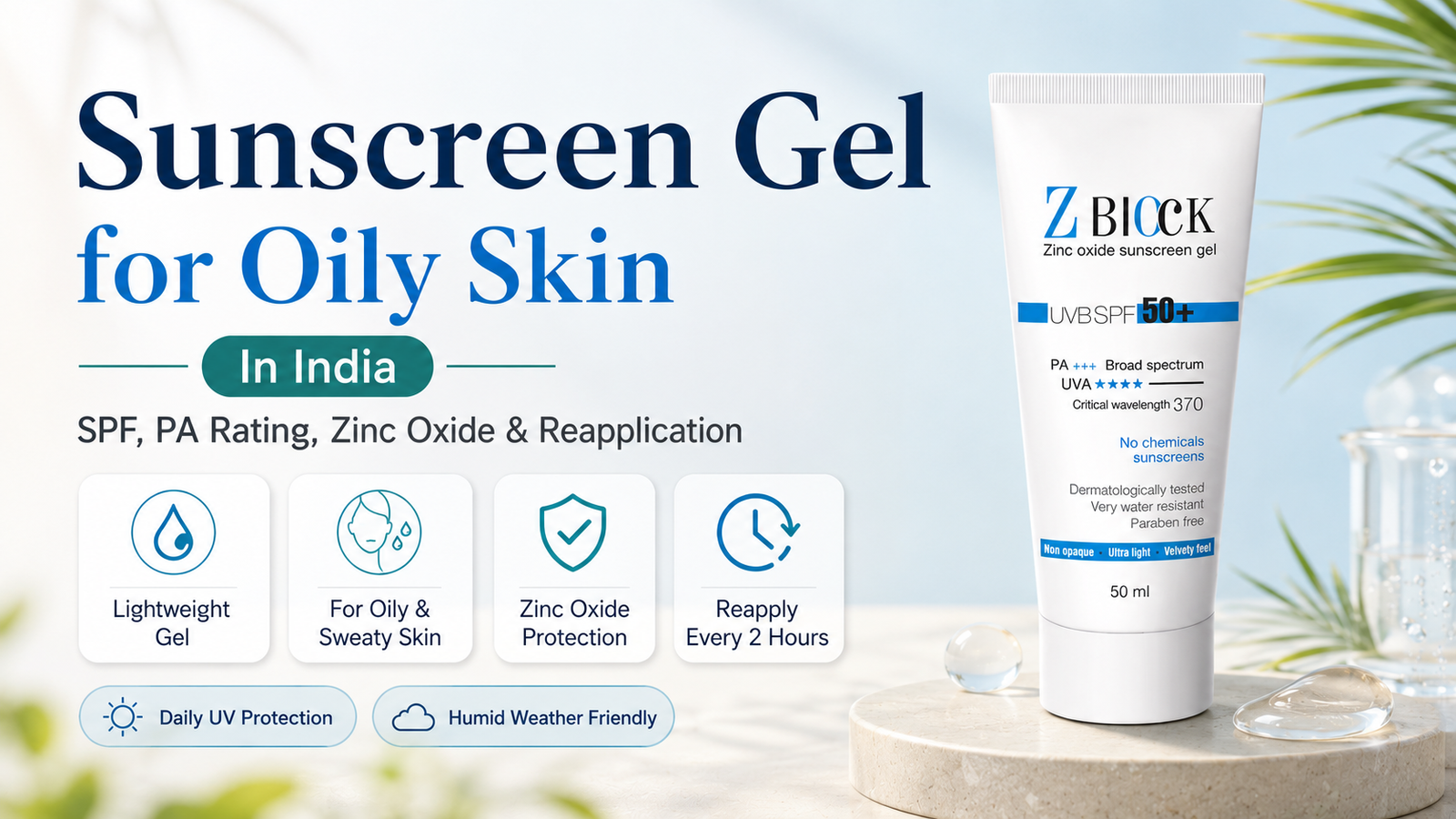

A good sunscreen gel for oily skin in India can help protect the skin from tanning, sun damage, pigmentation worsening, post-acne marks getting darker, and daily UV exposure — without feeling too greasy or heavy.
For oily skin users in India, sunscreen selection is often not just about SPF. It is also about texture, sweat comfort, finish, reapplication ease, and whether the sunscreen feels wearable in heat and humidity.
Many people with oily or acne-prone skin skip sunscreen because they feel that most products are:
- Sticky
- Heavy
- Greasy
- Sweaty
- Pore-clogging
- White on the skin
- Uncomfortable in humid weather
That is why gel sunscreens are often preferred. They usually feel lighter than thick cream sunscreens and are easier to wear daily, especially in Indian weather.
If you are looking for a product in this category, Z Block Sunscreen Gel can fit naturally as a zinc oxide-based gel sunscreen option for daily sun protection support.
Why Oily Skin Still Needs Sunscreen
A common myth is that oily skin does not need moisturizer or sunscreen. That is not true.
Oily skin still needs sunscreen because UV exposure can contribute to:
- Tanning
- Pigmentation
- Darker acne marks
- Uneven skin tone
- Premature ageing
- Sunburn
- Dullness
- Skin damage over time
Even if your skin becomes oily during the day, sunscreen is still necessary.
If you use products for acne, pigmentation, or brightening support but skip sunscreen, your skincare results may stay limited.
Why Gel Sunscreens Are Often Preferred for Oily Skin
Gel sunscreens are often chosen by oily-skin users because they usually feel lighter and more comfortable.
A sunscreen gel may be preferred because it can feel:
- Lightweight
- Less greasy
- Easier to spread
- More breathable
- Better for humid weather
- More comfortable for sweaty skin
- Easier to reapply
- Less heavy under makeup
Of course, not every gel sunscreen feels the same. But in general, oily and acne-prone skin users often find gel textures easier for daily wear.
Sunscreen Gel for Oily Skin in India: Who May Prefer It?
A sunscreen gel may be a good choice for:
- Oily skin users
- Combination skin users
- Acne-prone skin users
- People who sweat a lot
- People living in hot or humid cities
- Daily commuters
- College students
- Outdoor workers
- Users who dislike thick cream sunscreens
- People looking for a lighter daytime sunscreen
If heavy sunscreens make you skip usage, a gel sunscreen may be a better practical option.
What Does SPF Mean in Sunscreen?
SPF is one of the first things people notice on sunscreen packs.
SPF stands for Sun Protection Factor. It mainly refers to protection against UVB rays, which are linked more closely with sunburn.
In simple terms:
- SPF 30 = good daily protection for many users
- SPF 50 or 50+ = higher UVB protection support
- Higher SPF does not mean you can skip reapplication
A high SPF sunscreen is helpful, but it only works properly if you apply enough product and reapply when needed.
For oily skin in India, SPF 30 or higher is generally a smart choice for daily use.
What Does PA Rating Mean?
A lot of Indian users now look for PA rating, and that is a good thing.
PA rating mainly gives an idea about UVA protection.
UVA rays are important because they are linked with:
- Pigmentation worsening
- Dark spots
- Uneven tone
- Premature ageing
- Tanning support
- Long-term sun damage
You may see ratings like:
- PA+
- PA++
- PA+++
- PA++++
In general, more plus signs mean stronger UVA protection support.
For Indian conditions, especially if you are worried about pigmentation, tanning, or outdoor exposure, choosing a sunscreen with a good PA rating is important.
What Is Broad-Spectrum Sunscreen?
A sunscreen should ideally be broad-spectrum.
This means it helps protect against:
- UVB rays
- UVA rays
That matters because:
- UVB is more associated with sunburn
- UVA is more associated with tanning, pigmentation, and ageing
So when choosing a sunscreen gel for oily skin, do not look only at SPF. Also look for broad-spectrum protection.
Why Zinc Oxide Matters in Sunscreen
Some users specifically search for zinc oxide sunscreens, and for good reason.
Zinc oxide is a mineral sunscreen filter commonly used for broad-spectrum sun protection. It is often preferred by users who want:
- Mineral sunscreen support
- Daily sun protection
- Pigmentation-care support
- Sensitive-skin-friendly sunscreen direction
- Broad-spectrum UVA/UVB coverage
For oily skin, the final formula matters a lot. A zinc oxide sunscreen in a gel texture may feel more wearable than a thick, greasy sunscreen.
If the product is well-formulated, zinc oxide sunscreen can be a useful option even for oily or acne-prone skin.
Is Zinc Oxide Good for Oily Skin?
Yes, zinc oxide can be good for oily skin — but the final answer depends on the whole sunscreen formula, not just one ingredient.
A zinc oxide sunscreen may suit oily skin when it is:
- Lightweight
- Comfortable
- Non-greasy
- Easy to spread
- Non-comedogenic or acne-friendly in feel
- Designed for daily use
This is why Z Block Sunscreen Gel fits naturally into this topic. It brings together zinc oxide with a gel sunscreen format, which may be more appealing for oily-skin users who want lighter daily wear.
What Is White Cast in Sunscreen?
A common complaint with sunscreens — especially mineral sunscreens — is white cast.
White cast means:
- The sunscreen leaves a visible whitish layer
- The skin may look ashy
- The finish may not blend well
- It may feel cosmetically uncomfortable for regular use
This is one reason many users hesitate to choose mineral sunscreens.
However, product formulation matters. Some sunscreen gels are designed to reduce this problem and feel more wearable on the skin.
If you have oily skin, you will probably prefer a sunscreen that feels:
- Light
- Smooth
- Easy to blend
- Less visible on the skin
- Less greasy
- Comfortable for repeat use
Why Reapplication Matters
A lot of users focus on SPF but forget reapplication.
Even a good sunscreen may not protect properly for long if you:
- Sweat a lot
- Wipe your face
- Stay outdoors for hours
- Travel in strong sun
- Touch your face often
- Use too little product
That is why reapplication matters.
For outdoor exposure, sunscreen should usually be reapplied every 2 hours, or sooner if you sweat heavily or wipe your face.
For oily skin users, this is another reason gel sunscreens may feel easier — they can feel lighter during repeat application.
How Much Sunscreen Should You Apply?
Under-application is one of the biggest reasons sunscreen fails.
A small dot of sunscreen is usually not enough.
For the face and neck, apply a generous, even layer. Many people use the two-finger rule as a practical guide, though exact quantity may vary based on product texture and face size.
Important points:
- Cover face evenly
- Do not forget neck
- Do not forget ears
- Cover hairline area
- Reapply when outdoors
Too little sunscreen means less protection.
Sunscreen Gel for Oily Skin and Acne-Prone Skin
Many people with acne-prone skin avoid sunscreen because they are afraid of breakouts.
That is understandable, but skipping sunscreen may make post-acne marks darker and harder to manage.
A sunscreen gel may be better for acne-prone skin if it feels:
- Lightweight
- Less suffocating
- Less greasy
- Easier to wear
- More comfortable in heat and humidity
This makes gel sunscreens especially relevant for users dealing with:
- Oily skin
- Acne-prone skin
- Sweaty skin
- Humid-weather discomfort
- Outdoor exposure
- Darker post-acne marks
How to Choose the Best Sunscreen Gel for Oily Skin in India
Before buying, check these points:
1. SPF 30 or Higher
A good oily-skin sunscreen should usually have SPF 30 or higher.
2. Broad-Spectrum Protection
Make sure it protects against both UVA and UVB.
3. Good PA Rating
Look for PA+++ or higher if possible, especially if you are concerned about pigmentation or tanning.
4. Gel Texture
A gel format is usually more comfortable for oily or sweaty skin.
5. Comfortable Finish
The sunscreen should not feel too greasy, sticky, or suffocating.
6. Reapplication Comfort
If a sunscreen feels heavy on second application, daily sunscreen habits become harder to maintain.
7. White Cast Consideration
If visible white cast bothers you, choose a sunscreen known for a smoother cosmetic finish.
Sunscreen Gel for Oily Skin in India: Where Z Block Fits
If you are looking for a sunscreen gel for oily skin in India, Z Block Sunscreen Gel fits naturally into this category.
It is especially relevant for users who want:
- A gel sunscreen format
- Zinc oxide-based sun protection
- Broad-spectrum daily-use direction
- Oily-skin-friendly texture preference
- A more wearable sunscreen feel
- Tanning and pigmentation-care support
- Daily outdoor-use sunscreen support
Because oily skin users often need a sunscreen that is not too heavy, a product like Z Block can be positioned as a practical option for regular use.
How to Use Sunscreen Gel Correctly
Use sunscreen as the last step of your morning skincare routine.
Simple routine
- Cleanse your face
- Apply moisturizer if needed
- Apply sunscreen gel on face and neck
- Spread evenly
- Apply before outdoor exposure
- Reapply during the day when needed
If you use makeup, sunscreen should be applied before makeup.
Common Mistakes to Avoid
1. Using Too Little Sunscreen
This reduces protection.
2. Not Reapplying
One morning application may not last through outdoor exposure, sweat, and wiping.
3. Looking Only at SPF
Also check PA rating, texture, and broad-spectrum protection.
4. Choosing Heavy Sunscreens You Will Not Use
The best sunscreen is the one you will actually apply daily.
5. Skipping Sunscreen Because Skin Is Oily
Oily skin still needs sun protection.
6. Expecting Sunscreen to Remove Pigmentation
Sunscreen helps prevent worsening. It does not erase dark spots by itself.
What Results Can You Expect?
With regular and correct use, a sunscreen gel for oily skin may help support:
- Daily UV protection
- Less tanning
- Better support for pigmentation-prone skin
- Better support for acne-mark care routines
- Reduced sun-related dullness
- Better long-term skin protection
But sunscreen cannot:
- Remove pigmentation overnight
- Prevent tanning completely if underapplied
- Work all day from one tiny application
- Replace reapplication
- Replace hats, shade, or protective clothing
Final Thoughts
A sunscreen gel for oily skin in India can be one of the best practical options for users who struggle with greasy, sticky, or heavy sunscreens. In Indian weather — especially for oily, sweaty, acne-prone, or humidity-exposed skin — gel sunscreens are often easier to wear and reapply.
While choosing a sunscreen, do not focus only on SPF. Also pay attention to:
- PA rating
- Broad-spectrum protection
- Zinc oxide or filter type
- White cast concerns
- Texture and finish
- Reapplication comfort
If you want a product option in this category, Z Block Sunscreen Gel can fit naturally as a gel-based sunscreen choice for oily skin and daily sun-protection support.
FAQs-
Q1. Which sunscreen gel is best for oily skin in India?
Ans: The best sunscreen gel for oily skin should be lightweight, comfortable, broad-spectrum, and suitable for daily use. Z Block Sunscreen Gel is one option that fits this category.
Q2. Is gel sunscreen better for oily skin?
Ans: Gel sunscreens are often preferred for oily skin because they usually feel lighter and less greasy than heavy cream sunscreens.
Q3. What does SPF mean in sunscreen?
Ans: SPF stands for Sun Protection Factor and mainly refers to UVB protection.
Q4. What does PA rating mean?
Ans: PA rating mainly indicates UVA protection. More plus signs usually mean stronger UVA protection support.
Q5. Is zinc oxide sunscreen good for oily skin?
Ans: Yes, zinc oxide sunscreen can suit oily skin when the formula is lightweight and comfortable. A gel format may feel easier to wear.
Q6. Can sunscreen gel prevent tanning?
Ans: It can help reduce tanning when applied properly and reapplied as needed, but it may not prevent tanning fully if underapplied.
Q7. How often should I reapply sunscreen gel?
Ans: Reapply every 2 hours when outdoors, or sooner if you sweat heavily or wipe your face.
Q8. Can oily skin skip sunscreen in humid weather?
Ans: No. Oily skin still needs sunscreen even in humid weather.
Leave a Reply