

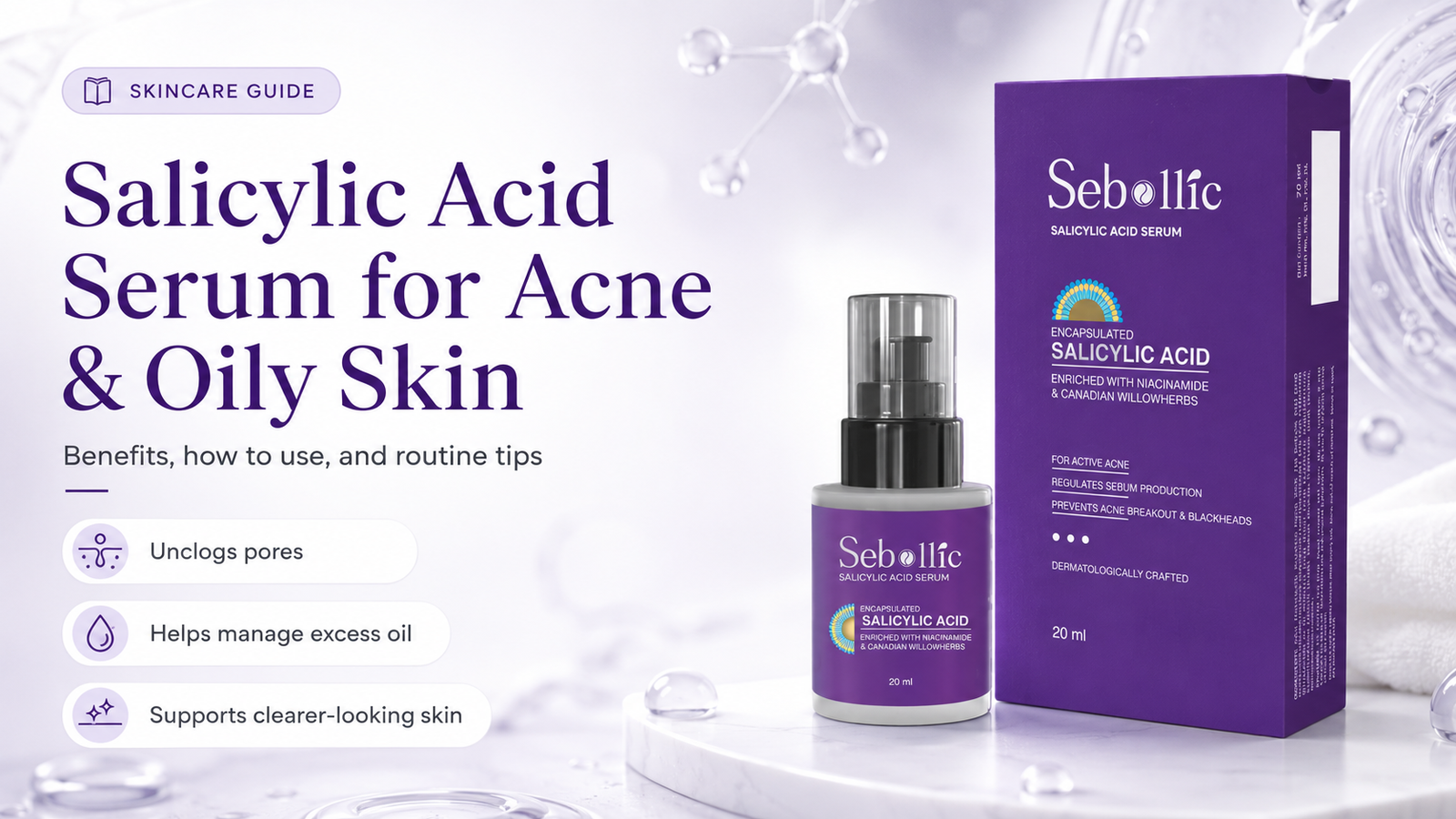

A salicylic acid serum for acne and oily skin can help manage excess oil, clogged pores, blackheads, whiteheads, and rough skin texture when used correctly. It is especially popular for oily and acne-prone skin because salicylic acid is a beta hydroxy acid, commonly known as BHA, that can work inside oily pores and support gentle exfoliation.
For Indian skin, where humidity, sweat, pollution, sunscreen buildup, and frequent oiliness are common concerns, salicylic acid can be a useful active ingredient. But it should not be used randomly or too aggressively. A good routine also needs a gentle cleanser, lightweight moisturizer, and daily sunscreen.
Salicylic acid is widely used in acne care because it helps exfoliate the skin and unclog pores. The American Academy of Dermatology notes that salicylic acid is used for acne and can help open clogged pores, especially in concerns like whiteheads and pimples.
What Is Salicylic Acid Serum?
Salicylic acid is an exfoliating skincare ingredient from the BHA family. Unlike some water-soluble exfoliating acids, salicylic acid is oil-soluble, which means it is often preferred for oily and congested skin.
A salicylic acid serum is usually a leave-on product designed to be applied after cleansing and before moisturizer. It may help loosen dead skin buildup, reduce pore congestion, and support smoother-looking skin.
It is commonly used for:
- Oily skin
- Acne-prone skin
- Blackheads
- Whiteheads
- Clogged pores
- Uneven skin texture
- Greasy T-zone
- Mild congestion around nose, chin, and forehead
It is not a magic acne cure. Acne can happen due to hormones, excess oil, clogged pores, bacteria, stress, diet triggers, product buildup, or skin barrier damage. Salicylic acid can support the routine, but results vary from person to person.
How Salicylic Acid Helps Acne and Oily Skin
Salicylic acid helps acne-prone and oily skin mainly by working on pore congestion. When oil, dead skin cells, sweat, and product residue collect inside pores, they can lead to blackheads, whiteheads, bumps, and breakouts.
1. Helps Unclog Pores
Salicylic acid can exfoliate inside the pore lining and help reduce buildup. This makes it useful for people who often notice small bumps, clogged pores, or blackheads around the nose and chin.
2. Supports Oil-Control Routine
It does not permanently stop oil production, but it can help make oily skin feel less congested when used consistently with the right cleanser and moisturizer.
3. Helps With Blackheads and Whiteheads
Blackheads and whiteheads often happen when pores are blocked with oil and dead skin. Salicylic acid can support clearer-looking pores over time.
4. Improves Rough Skin Texture
By removing dead skin buildup gently, salicylic acid may help the skin feel smoother and less bumpy.
5. Supports Acne-Prone Skin Care
The American Academy of Dermatology’s updated acne guidance conditionally recommends salicylic acid for acne treatment, which supports its role as a useful non-prescription acne-care ingredient.
Who Should Use Salicylic Acid Serum?
A salicylic acid serum can be suitable for people who have:
| Skin Concern | Why Salicylic Acid May Help |
|---|---|
| Oily skin | Supports a less congested routine |
| Acne-prone skin | Helps reduce pore buildup |
| Blackheads | Helps clear trapped oil and dead skin |
| Whiteheads | Supports clogged-pore care |
| Bumpy texture | Helps exfoliate dead skin buildup |
| Sweaty, humid-weather skin | Useful when pores feel blocked often |
For Indian users, salicylic acid can be especially helpful during hot and humid weather when the skin feels sticky, oily, and prone to congestion.
Who Should Be Careful Before Using It?
Salicylic acid may not suit everyone in the same way. Be careful if your skin is:
- Very dry
- Very sensitive
- Already peeling
- Burning or irritated
- Damaged due to over-exfoliation
- Reacting to multiple active ingredients
- Undergoing dermatologist treatment
If you have severe acne, painful cystic acne, active irritation, allergy, or persistent breakouts, it is better to consult a dermatologist instead of experimenting with many products.
Some acne-support resources also mention that salicylic acid may cause dryness, redness, burning, or irritation, especially when overused.
How to Apply Salicylic Acid Serum Correctly
The safest way to use salicylic acid serum is to start slowly.
Simple Night Routine
- Cleanse your face
Use a gentle face wash. Avoid harsh scrubbing. - Pat skin dry
Do not apply active serum on dripping wet skin unless the product instructions say so. - Apply salicylic acid serum
Use a small amount. Apply mainly on oily, acne-prone, or congested areas. - Follow with moisturizer
This helps reduce dryness and supports the skin barrier. - Use sunscreen in the morning
Daily sunscreen is important when using exfoliating actives.
How Often Should You Use It?
Beginners can start with 2–3 nights per week. If the skin feels comfortable, usage can be adjusted as per product instructions and skin tolerance.
Do not start by using it twice daily unless specifically advised by a dermatologist or clearly mentioned on the product label.
What Not to Mix Casually With Salicylic Acid
Many people damage their skin barrier by using too many active ingredients together. Salicylic acid should be used carefully, especially if your routine already includes strong actives.
Avoid casually mixing salicylic acid in the same routine with:
- Retinol
- Strong AHA exfoliants like glycolic acid
- Other peeling/exfoliating serums
- Benzoyl peroxide, unless guided properly
- Harsh acne creams
- Scrubs
- Alcohol-heavy toners
This does not mean these ingredients can never be used in a skincare routine. It means they should not be layered randomly, especially by beginners.
A simple rule: one active at a time is safer for most beginners.
Why Moisturizer Matters With Salicylic Acid
Many oily-skin users skip moisturizer because they think it will make the skin more greasy. This is a common mistake.
When you use salicylic acid, your skin may feel dry, tight, or slightly sensitive if the barrier is not supported. A lightweight, non-sticky moisturizer helps keep the skin comfortable.
For oily and acne-prone skin, choose a moisturizer that feels:
- Lightweight
- Non-greasy
- Gel-based or lotion-based
- Comfortable in Indian weather
- Suitable for acne-prone skin
Moisturizer does not reduce the effect of salicylic acid. It helps your skin tolerate the routine better.
Why Sunscreen Is Important in This Routine
Sunscreen is important when using salicylic acid because exfoliating skincare can make the skin more vulnerable to dryness, sensitivity, and sun-related dullness.
In India, sun exposure, heat, pollution, and sweating can make acne marks and uneven skin tone look more noticeable. Using sunscreen in the morning helps protect the skin and supports a more complete routine.
Choose a sunscreen that is:
- Lightweight
- Non-greasy
- Comfortable for daily use
- Suitable for oily or acne-prone skin
- Easy to reapply when outdoors
If you use salicylic acid at night but skip sunscreen in the morning, your routine is incomplete.
Common Mistakes to Avoid
1. Using It Too Often From Day One
Start slow. Overuse can cause dryness, peeling, redness, or irritation.
2. Applying Too Much Product
More serum does not mean faster results. A thin layer is enough.
3. Mixing Multiple Actives Together
Do not combine salicylic acid with retinol, strong acids, scrubs, and acne creams without understanding your skin tolerance.
4. Skipping Moisturizer
Even oily skin needs barrier support.
5. Skipping Sunscreen
Sunscreen is important in any active skincare routine.
6. Expecting Overnight Acne Clearance
Salicylic acid supports acne-prone skin, but it does not cure acne overnight.
7. Using It on Broken or Irritated Skin
Avoid applying salicylic acid on cuts, rashes, burning skin, or freshly irritated areas.
How to Choose the Right Salicylic Acid Serum
When buying a salicylic acid serum for acne and oily skin, look for a product that fits your skin type and routine.
Check These Points
| What to Check | Why It Matters |
|---|---|
| Salicylic acid percentage | Beginners should avoid overly aggressive formulas |
| Texture | Lightweight serum is better for oily skin |
| Supporting ingredients | Hydrating or soothing ingredients can improve comfort |
| Usage instructions | Helps prevent overuse |
| Skin type suitability | Important for acne-prone or sensitive skin |
| Brand trust | Choose products with clear ingredient and usage information |
A good salicylic acid serum should feel practical, not harsh. For daily Indian skincare routines, comfort and consistency matter more than using the strongest product.
Zodab Skincare Routine Suggestion
For oily and acne-prone skin, Zodab can guide users with a simple routine:
Morning Routine
- Gentle face wash
- Lightweight moisturizer
- Sunscreen
Night Routine
- Gentle face wash
- Salicylic acid serum
- Lightweight moisturizer
This routine can support oily, congested, and acne-prone skin without making the process confusing.
You can explore relevant skincare products on Zodab.in, including acne-prone skin care, oily skin face washes, salicylic acid serums, lightweight moisturizers, and sunscreen options.
Final Takeaway
A salicylic acid serum for acne and oily skin can be a useful product if your main concerns are oiliness, clogged pores, blackheads, whiteheads, and mild acne-prone congestion. It works best when used slowly, carefully, and with a complete routine that includes moisturizer and sunscreen.
Do not treat salicylic acid as a quick fix. Think of it as a supportive active ingredient that works better when your overall skincare routine is balanced.
Skincare note: This content is for general skincare education. If you have severe acne, painful breakouts, irritation, allergy, or persistent skin concerns, consult a dermatologist.
FAQs-
Q1. Is salicylic acid serum good for oily skin?
Ans: Yes, salicylic acid serum is often preferred for oily skin because it can help reduce pore congestion, blackheads, whiteheads, and excess oil buildup. It should be used slowly and followed with moisturizer.
Q2. Can salicylic acid serum remove acne permanently?
Ans: No. Salicylic acid does not permanently cure acne. It can support acne-prone skin by helping unclog pores and manage congestion, but acne can have many causes.
Q3. Can I use salicylic acid serum every day?
Ans: Beginners should usually start with 2–3 nights per week. Daily use depends on your skin tolerance and the product instructions.
Q4. Should I apply moisturizer after salicylic acid serum?
Ans: Yes. Moisturizer helps reduce dryness, tightness, and irritation. Even oily skin needs moisture support.
Q5. Can I use salicylic acid serum in the morning?
Ans: It is commonly used at night, especially by beginners. If used in the morning, sunscreen is very important.
Q6. What should I not mix with salicylic acid?
Ans: Avoid casually mixing salicylic acid with retinol, strong AHAs, peeling solutions, scrubs, or multiple acne actives in the same routine unless you understand your skin tolerance.
Q7. Is salicylic acid serum suitable for sensitive skin?
Ans: Sensitive skin users should be careful. Start slowly, patch test, and avoid using it on irritated or damaged skin.
Leave a Reply