

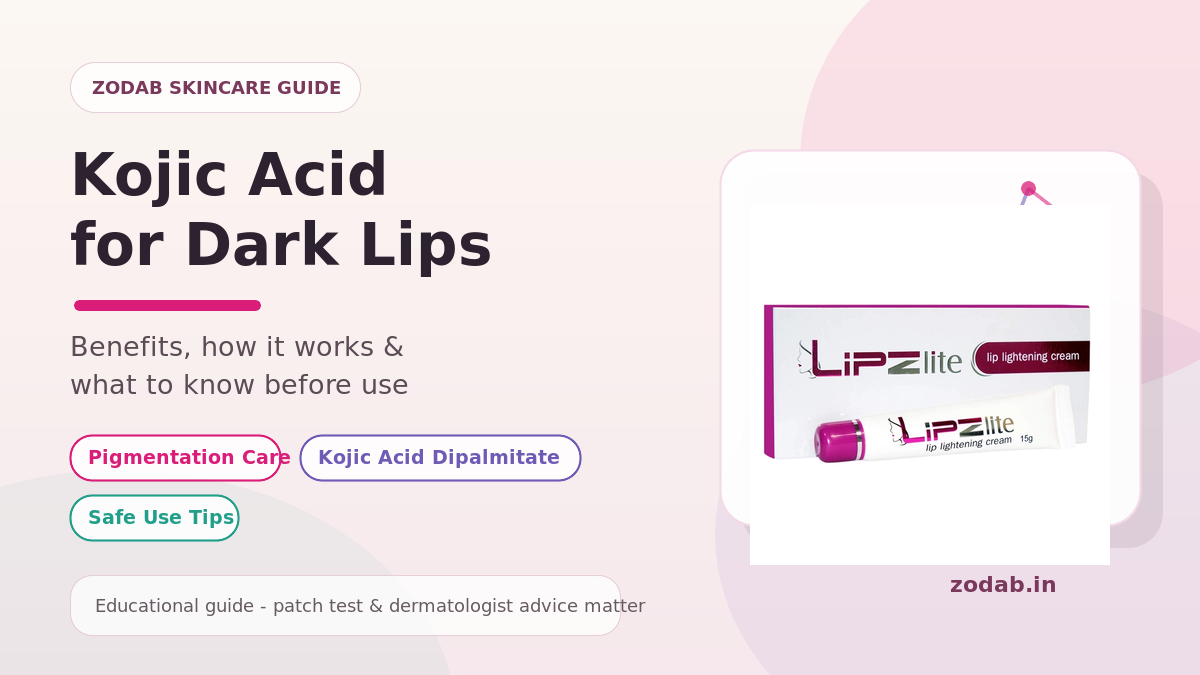

Kojic acid is a skincare ingredient commonly used in pigmentation-care products. For dark lips, it may help support a more even-looking lip tone by targeting the appearance of pigmentation. However, lips are more delicate than facial skin, so kojic acid-based products should be used carefully, preferably in a formula made for lip care.
Many people in India search for kojic acid for dark lips because lip pigmentation is common due to sun exposure, tanning, dryness, smoking, dehydration, lip licking, harsh lip products, or natural melanin levels. Kojic acid may help in pigmentation-focused routines, but it should not be treated as an instant or permanent lip-lightening solution.
What Is Kojic Acid?
Kojic acid is a well-known cosmetic ingredient used in skincare products for dark spots, uneven tone, and pigmentation care. It is commonly used in creams, serums, soaps, and targeted brightening products.
In skincare, kojic acid is mainly known for its role in helping reduce the appearance of pigmentation. It works by influencing melanin production, which is one of the key factors behind dark spots and uneven skin tone. Reviews on kojic acid describe it as a tyrosinase-inhibiting ingredient, meaning it can affect the enzyme involved in melanin formation.
For lips, kojic acid is usually more relevant when it is part of a balanced lip-care formula, rather than being used directly or in harsh concentrations.
Can Kojic Acid Help with Dark Lips?
Kojic acid may help improve the appearance of dark or pigmented lips when the pigmentation is related to excess melanin, tanning, dullness, or uneven tone.
It may be useful for:
- Dark-looking lips
- Uneven lip tone
- Pigmented lip edges
- Dull lips caused by tanning or dryness
- Lips that look darker due to lifestyle factors
However, it may not work the same for everyone. Lip colour can be affected by genetics, natural melanin, smoking, sun exposure, hormonal factors, allergies, irritation, and certain medical conditions. If lip darkening is sudden, severe, painful, or accompanied by irritation, it is better to consult a dermatologist.
How Kojic Acid Works for Pigmentation
Kojic acid works mainly by helping reduce the activity of tyrosinase, an enzyme involved in melanin production. Melanin is the pigment that gives colour to the skin and lips.
When melanin production becomes uneven or excessive in certain areas, the skin or lips may look darker. Kojic acid may help support a more even-looking tone by targeting this pigmentation pathway. Scientific reviews describe kojic acid as a cosmetic and pharmaceutical ingredient used for skin-lightening and pigmentation-related concerns because of its tyrosinase-inhibiting activity.
For lips, this does not mean instant whitening. It simply means kojic acid may support the appearance of a more even tone when used correctly and consistently.
Kojic Acid vs Kojic Acid Dipalmitate
Kojic acid and kojic acid dipalmitate are related, but they are not exactly the same.
| Point | Kojic Acid | Kojic Acid Dipalmitate |
|---|---|---|
| Type | Original kojic acid form | Esterified derivative of kojic acid |
| Solubility | More water-soluble | More oil-soluble |
| Stability | Can be less stable in some formulas | Generally considered more stable |
| Common use | Serums, creams, soaps | Creams, lotions, oil-based or lip-care formulas |
| Suitability | Depends on concentration and formula | Often preferred in more stable cosmetic formulas |
Kojic acid dipalmitate is often used in cosmetic formulations because it is more stable against light, heat, and oxidation compared with kojic acid. Some formulation sources also describe it as oil-soluble, which can make it suitable for creams and lip-care products.
This matters because lips need a formula that is not only pigmentation-focused but also comfortable, moisturising, and suitable for delicate skin.
Is Kojic Acid Suitable for Lips?
Kojic acid can be used in lip-care products, but it should be used carefully. The lips have thinner and more delicate skin than many other areas of the face. A harsh product, overuse, or incorrect concentration may cause dryness, irritation, burning, or sensitivity.
For dark lips, it is usually better to choose a product made specifically for lips rather than applying random kojic acid serums or face creams directly on the lips.
A good lip pigmentation formula should ideally combine:
- Pigmentation-support ingredients
- Moisturising ingredients
- Barrier-support ingredients
- Gentle usage instructions
- A non-irritating texture
If your lips are cracked, bleeding, burning, or already irritated, avoid using active brightening ingredients until the lips recover.
Benefits of Kojic Acid for Dark Lips
Kojic acid may offer the following benefits in a lip pigmentation routine:
1. May Support Even-Looking Lip Tone
Kojic acid is used in pigmentation-care products because it may help reduce the appearance of uneven tone.
2. May Help with Dark-Looking Lips
When lip darkening is linked to pigmentation, tanning, or dullness, kojic acid-based formulas may support visible improvement over time.
3. Works Well with Other Brightening-Support Ingredients
Kojic acid is often used with ingredients such as niacinamide, vitamin C, arbutin, liquorice extract, and gentle exfoliating ingredients in pigmentation-care formulas.
4. Can Support Targeted Lip-Care Routines
For users specifically searching for dark lips, kojic acid can be part of a more focused lip-care routine rather than using only basic lip balm.
5. May Be Useful in Cream-Based Products
Leave-on creams may be more practical than rinse-off products because the ingredient has more contact time with the skin. Dermatology-led beauty explainers often mention that leave-on formats such as creams or serums are generally more useful than rinse-off kojic acid soaps for pigmentation support.
Who Should Be Careful Before Using Kojic Acid on Lips?
Kojic acid may not suit everyone, especially on the lips. Be careful if you have:
- Very sensitive lips
- Cracked or bleeding lips
- Active irritation or burning
- Lip allergies
- Eczema around the mouth
- Recent reaction to lip products
- Severe dryness
- Sudden or unexplained lip darkening
Kojic acid can cause irritation or contact dermatitis in some people, especially those with sensitive skin or when used in stronger concentrations. Reported reactions may include redness, itching, rash, dryness, swelling, or discomfort.
If you feel burning, swelling, rashes, or strong discomfort after applying a kojic acid-based lip product, stop using it and consult a dermatologist.
Why Moisturising Matters When Using Pigmentation-Care Ingredients
Moisturising is very important when using any pigmentation-care ingredient on the lips.
Dry lips often look darker, rougher, and duller. If the lip barrier is weak, active ingredients may also feel more irritating. A good dark-lip routine should not only focus on brightening ingredients but also on softness, hydration, and barrier comfort.
For better lip care:
- Use a gentle lip balm regularly
- Avoid peeling dry skin from lips
- Do not over-scrub
- Avoid licking lips repeatedly
- Drink enough water
- Avoid expired or irritating lip products
For pigmented lips, moisturising is not optional. It supports comfort and helps the lips look healthier while the pigmentation-care product works gradually.
Why Sun Protection Matters for Dark Lips
Sun exposure can make pigmentation worse. In India, heat, UV exposure, pollution, and outdoor travel can contribute to tanning and uneven-looking lips.
If you are using kojic acid or any pigmentation-care product, daytime protection matters. Use a lip balm with SPF during the day, especially if you go outdoors.
Without sun protection, pigmentation may keep coming back or may not improve as expected. This is why a complete lip pigmentation routine should include:
- A targeted product at night or as directed
- Regular moisturising
- SPF lip balm during the day
- Avoiding habits that worsen dark lips
Kojic acid may support pigmentation care, but sun protection helps prevent further darkening.
Kojic Acid in Lipzlite Cream
Lipzlite Cream is a lip lightening and pigmentation-care product that references kojic acid dipalmitate as one of its key ingredients. Kojic acid dipalmitate is commonly used in cosmetic formulas as a more stable derivative of kojic acid, which makes it relevant for cream-based products and lip-care formulations.
This makes Lipzlite a relevant product for users searching for kojic acid for dark lips, especially if they want a ready-made lip-focused formula rather than experimenting with face products on their lips.
You can explore Lipzlite Cream on Zodab
Final Thoughts
Kojic acid may help support a more even-looking lip tone when dark lips are linked to pigmentation, tanning, dullness, or uneven melanin appearance. However, lips are delicate, so the formula matters.
Kojic acid dipalmitate, a more stable derivative of kojic acid, is often used in cosmetic creams and lip-care products. This is why products like Lipzlite Cream can be useful for people looking for a targeted dark-lip care product.
For best results, do not rely only on one ingredient. Combine targeted lip care with moisturising, SPF lip balm during the day, hydration, and avoiding habits that worsen lip darkening.
FAQs-
Q1. Is kojic acid good for dark lips?
Ans: Kojic acid may help support a more even-looking lip tone when dark lips are related to pigmentation, tanning, or uneven melanin appearance. It should be used carefully because lips are delicate.
Q2. Can I apply kojic acid directly on my lips?
Ans: It is better to use a product specifically formulated for lips rather than applying random kojic acid serums or face creams directly on the lips. Lip skin is sensitive and can get irritated easily.
Q3. What is kojic acid dipalmitate?
Ans: Kojic acid dipalmitate is a derivative of kojic acid. It is commonly used in cosmetic formulas because it is more stable and oil-soluble compared with kojic acid.
Q4. What is the difference between kojic acid and kojic acid dipalmitate?
Ans: Kojic acid is the original form, while kojic acid dipalmitate is a more stable derivative. Kojic acid is more water-soluble, while kojic acid dipalmitate is more oil-soluble and often used in creams and cosmetic formulations.
Q5. Does kojic acid lighten lips permanently?
Ans: No. Kojic acid does not permanently change natural lip colour. It may help improve the appearance of pigmentation, but results vary and maintenance matters.
Q6. Can kojic acid irritate lips?
Ans: Yes, kojic acid can irritate some people, especially those with sensitive skin or damaged lips. Possible reactions include redness, itching, rash, dryness, swelling, or discomfort.
Q7. Should I use sunscreen or SPF lip balm with kojic acid?
Ans: Yes. Sun exposure can worsen pigmentation. If you are using pigmentation-care ingredients, use SPF lip balm during the day to protect your lips.
Q8. Which product contains kojic acid dipalmitate for dark lips?
Ans: Lipzlite Cream references kojic acid dipalmitate as a key ingredient and can be considered by users looking for a targeted lip pigmentation-care product.
Leave a Reply