

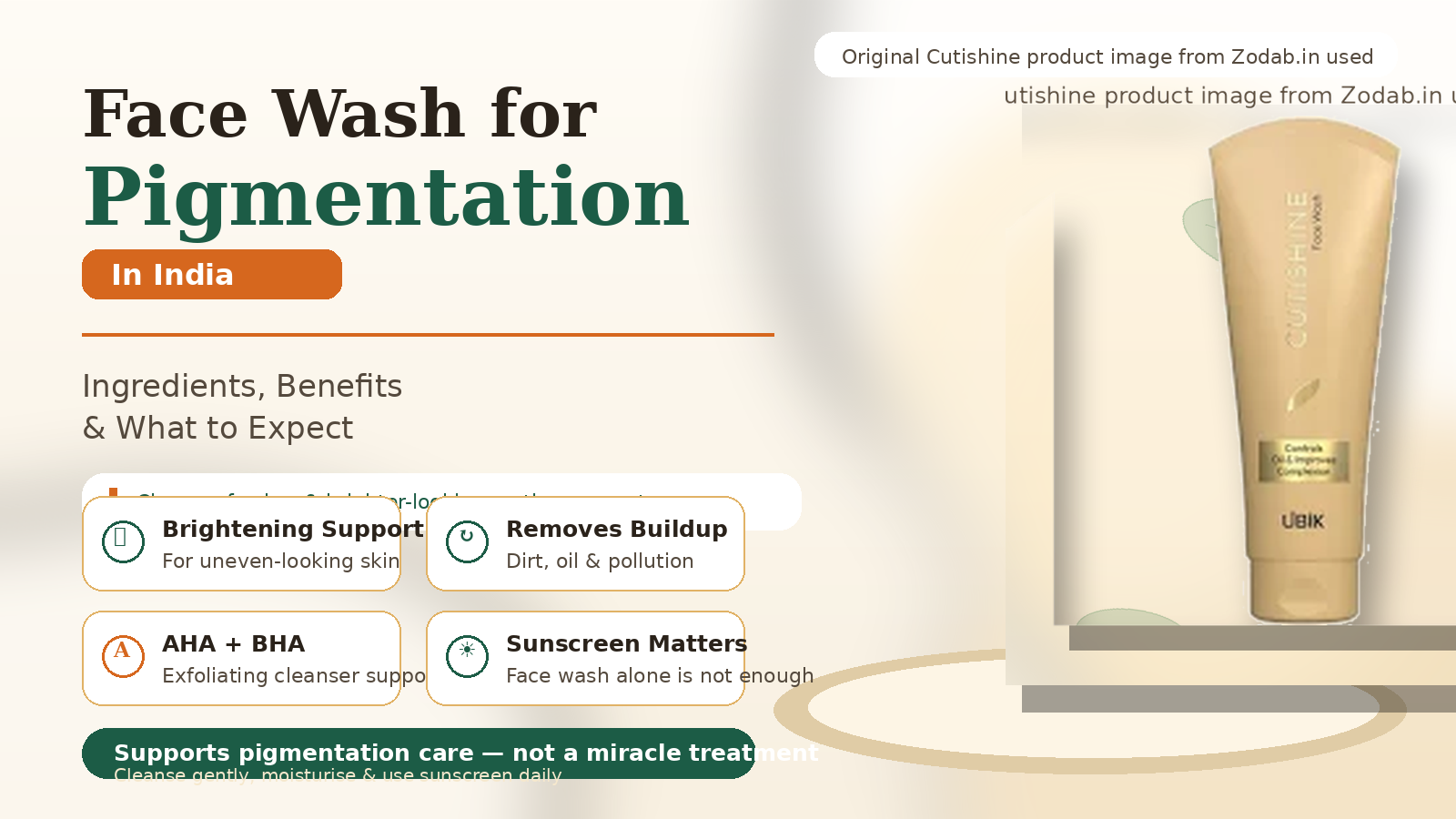

A face wash for pigmentation in India can help support a brighter-looking skincare routine by removing dirt, oil, sweat, pollution, sunscreen residue, and dead skin buildup. But it is important to be realistic: face wash alone cannot fully remove pigmentation, dark spots, melasma, tanning, or post-acne marks.
Pigmentation is usually deeper than surface dirt. It can happen because of sun exposure, acne marks, hormonal changes, inflammation, tanning, melasma, skin irritation, or uneven melanin production. A cleanser can support the routine, but it cannot replace sunscreen, targeted treatments, moisturiser, and dermatologist advice when needed.
The right face wash can still be useful, especially if your pigmentation is linked with dullness, oil buildup, clogged pores, acne-prone skin, or dead skin accumulation. If you are looking for a cleanser that supports oily, acne-prone, dull, and blemish-prone skin, Cutishine Face Wash can be a relevant option because it contains ingredients such as glycolic acid, salicylic acid, liquorice extract, tea tree oil, and aloe vera. Product listings mention glycolic acid 2%, salicylic acid 0.5%, liquorice extract 1%, tea tree oil 0.5%, and aloe vera 2.06%.
Quick Answer: Can Face Wash Remove Pigmentation?
A face wash can support pigmentation care, but it usually cannot remove pigmentation completely on its own.
A good face wash may help by:
- Removing daily buildup
- Cleansing oil and pollution residue
- Supporting smoother-looking skin
- Helping dull skin look fresher
- Supporting mild exfoliation if it contains AHA/BHA
- Preparing skin for leave-on skincare products
But face wash cannot fully treat:
- Melasma
- Deep pigmentation
- Long-term dark spots
- Stubborn tanning
- Post-inflammatory hyperpigmentation
- Hormonal pigmentation
- Acne marks that need targeted treatment
For pigmentation, daily sunscreen is non-negotiable. Dermatologists recommend broad-spectrum, water-resistant sunscreen with SPF 30 or higher, and the American Academy of Dermatology also advises reapplying sunscreen every two hours and after sweating or swimming when dealing with dark spots.
Why Pigmentation Happens
Pigmentation happens when some areas of the skin produce or hold more melanin than others. This can make the skin look patchy, uneven, dull, tanned, or marked.
Common causes include:
1. Sun Exposure
Sun exposure is one of the biggest triggers for tanning, dark spots, and uneven tone. Even if you use a brightening face wash, skipping sunscreen can make pigmentation worse.
2. Acne Marks
After pimples heal, they can leave brown marks or dark spots. These are often called post-acne marks or post-inflammatory hyperpigmentation.
3. Pollution and Buildup
Pollution, sweat, dirt, and oil buildup can make the skin look dull and uneven, even if they do not directly cause deep pigmentation.
4. Hormonal Changes
Melasma and some types of pigmentation can be linked with hormones. These usually need dermatologist-guided care.
5. Harsh Skincare
Over-scrubbing, strong peels, too many actives, or irritating products can inflame the skin and worsen pigmentation, especially in Indian skin tones.
6. Tanning
Tanning from sun exposure can make the skin look darker and uneven. A face wash may support surface freshness but cannot remove tan fully without sun protection and consistent skincare.
What Should a Face Wash for Pigmentation Do?
A face wash for pigmentation should not promise instant fairness or permanent spot removal. A good cleanser should support the routine by keeping the skin clean and comfortable.
It should ideally help with:
- Dirt and pollution removal
- Excess oil cleansing
- Sunscreen and makeup residue removal
- Dead skin buildup support
- Smoother-looking skin
- Brighter-looking appearance
- Pore cleansing if skin is oily or acne-prone
- Comfortable cleansing without irritation
The goal is cleaner, fresher, brighter-looking skin support, not overnight pigmentation removal.
Best Ingredients to Look for in a Face Wash for Pigmentation
1. Glycolic Acid
Glycolic acid is an AHA, or alpha hydroxy acid. It supports surface exfoliation by helping remove dead skin buildup.
It may help with:
- Dull skin
- Rough texture
- Uneven-looking skin
- Dead skin buildup
- Brighter-looking appearance
Cutishine Face Wash contains glycolic acid 2%, according to multiple product listings.
Since glycolic acid can increase sensitivity in some users, sunscreen is very important during the day.
2. Salicylic Acid
Salicylic acid is a BHA, or beta hydroxy acid. It is useful when pigmentation concerns are linked with oily skin, clogged pores, blackheads, whiteheads, or acne marks.
It may help with:
- Pore cleansing
- Oily skin
- Acne-prone skin
- Surface buildup
- Congested-looking skin
The American Academy of Dermatology notes that salicylic acid helps open clogged pores and exfoliate the skin, and it is available in products such as cleansers and moisturisers.
3. Liquorice Extract
Liquorice extract is commonly used in brightening-support skincare. It may help support dullness and uneven-looking skin tone.
It may be useful for:
- Dull-looking skin
- Uneven tone
- Post-acne mark support
- Brightening-focused routines
Cutishine Face Wash listings mention liquorice extract 1%.
4. Aloe Vera
Aloe vera is used for soothing and moisture-support benefits. This matters because pigmentation-prone skin should not be irritated by harsh cleansing.
Aloe vera may help with:
- Skin comfort
- Reduced tightness
- Soothing feel
- Hydration support
Cutishine Face Wash listings mention aloe vera around 2% to 2.06%.
5. Tea Tree Oil
Tea tree oil is more relevant when pigmentation is linked with acne-prone or oily skin. It is often used in acne-support skincare, but it can irritate sensitive skin if overused.
It may support:
- Oily skin routines
- Acne-prone skin care
- Blemish-prone skin
- Fresher skin feel
Cutishine Face Wash listings mention tea tree oil 0.5%.
Face Wash for Pigmentation in India: Where Cutishine Fits
If you are looking for a face wash that supports dullness, oil buildup, acne-prone skin, and uneven-looking skin, Cutishine Face Wash fits naturally into this category.
Cutishine may be useful for people who want:
- A face wash for pigmentation-support routines
- A cleanser for dull-looking skin
- Support for oily and acne-prone skin
- Help with dead skin buildup
- Pore-cleansing support
- Ingredients like glycolic acid and salicylic acid
- Brightening-support ingredients like liquorice extract
- Skin comfort support from aloe vera
It is especially relevant when pigmentation is connected with:
- Oily skin
- Acne marks
- Dullness
- Pollution buildup
- Clogged pores
- Uneven skin texture
- Blemish-prone skin
What Cutishine Face Wash Can and Cannot Do for Pigmentation
| What It May Support | What It Cannot Guarantee |
|---|---|
| Cleaner, fresher skin | Complete pigmentation removal |
| Mild exfoliation support | Overnight dark spot fading |
| Oil and buildup removal | Melasma treatment |
| Brighter-looking appearance | Permanent tan removal |
| Pore cleansing | Deep pigment correction |
| Acne-prone skin routine | Replacing sunscreen or treatment |
| Dullness support | Removing old stubborn marks alone |
This is the right way to position it: Cutishine Face Wash can support a pigmentation-care routine, but it is not a standalone pigmentation treatment.
Why Sunscreen Matters More Than Face Wash for Pigmentation
If you are trying to reduce pigmentation, sunscreen is more important than any face wash.
Without sunscreen:
- Dark spots may become darker
- Tanning may return quickly
- Acne marks may take longer to fade
- Melasma may worsen
- Brightening products may not show results
The American Academy of Dermatology recommends SPF 30 or higher, broad-spectrum, water-resistant sunscreen. For dark spots, they also advise reapplying sunscreen every two hours and after swimming or sweating.
So, if you use a face wash for pigmentation, pair it with sunscreen every morning.
How to Use a Face Wash for Pigmentation Correctly
A pigmentation-support cleanser should be used gently.
Follow this simple routine:
- Wet your face with normal water.
- Take a small amount of face wash.
- Apply gently on the face.
- Massage softly in circular motions.
- Do not scrub harshly.
- Avoid the eye area.
- Rinse thoroughly.
- Pat dry with a clean towel.
- Apply moisturiser.
- Use sunscreen during the day.
If your face wash contains glycolic acid or salicylic acid, avoid using too many exfoliating products in the same routine.
How Often Should You Use It?
Start slowly, especially if your skin is new to AHA/BHA cleansers.
| Skin Type / Concern | Suggested Use |
|---|---|
| Oily dull skin | Start once daily |
| Acne-prone skin | Once daily or as tolerated |
| Combination skin | Use based on oily areas |
| Dry skin | Use less frequently |
| Sensitive skin | Use carefully or avoid |
| Skin on retinoids or acne treatment | Ask a dermatologist first |
| Irritated or peeling skin | Avoid until skin recovers |
If the skin feels tight, dry, burning, flaky, or irritated, reduce frequency or stop use.
What Else Should You Use With a Face Wash for Pigmentation?
A face wash is only one part of the routine.
For pigmentation support, your routine may need:
Morning
- Gentle cleanser
- Lightweight moisturiser
- Broad-spectrum SPF 30+ sunscreen
Night
- Gentle cleanser
- Moisturiser
- Targeted serum or treatment if advised
Depending on your skin, helpful ingredients in leave-on products may include niacinamide, vitamin C, azelaic acid, kojic acid, alpha arbutin, retinoids, or dermatologist-prescribed treatments.
Do not mix too many actives at once. Irritation can worsen pigmentation.
Common Mistakes to Avoid
1. Expecting Face Wash to Remove Pigmentation Alone
A cleanser is a support product. It cannot replace sunscreen and targeted treatment.
2. Skipping Sunscreen
This is the biggest mistake. Pigmentation usually worsens with sun exposure.
3. Scrubbing Dark Spots
Scrubbing can irritate the skin and make pigmentation worse.
4. Using Too Many Actives
Using AHA, BHA, retinol, vitamin C, peeling solutions, and acne treatments together can irritate the skin.
5. Washing Too Often
Over-cleansing can damage the skin barrier and increase dryness or sensitivity.
6. Ignoring Acne
If acne is causing pigmentation, controlling acne is important. Otherwise, new marks may keep forming.
Who Should Be Careful?
Be careful with active face washes if you have:
- Very dry skin
- Very sensitive skin
- Broken skin
- Active rash
- Eczema-prone skin
- Burning or peeling skin
- Melasma
- Severe pigmentation
- Skin already using retinoids or peeling acids
- Ongoing dermatologist treatment
For melasma, stubborn dark spots, or sudden pigmentation, consult a dermatologist.
Final Thoughts
A face wash for pigmentation in India can support a brighter-looking routine, but it should not be treated as a complete pigmentation treatment. Pigmentation usually needs consistent sunscreen, gentle skincare, moisturiser, and sometimes targeted treatment.
If your pigmentation concerns are linked with dullness, oil buildup, acne marks, clogged pores, or pollution exposure, Cutishine Face Wash can be a useful cleanser to consider. Its ingredients — glycolic acid, salicylic acid, liquorice extract, tea tree oil, and aloe vera — make it relevant for oily, acne-prone, dull, and blemish-prone skin routines.
Use it gently, avoid over-cleansing, moisturise regularly, and apply sunscreen every day.
FAQs-
Q1. Which is the best face wash for pigmentation in India?
Ans: The best face wash for pigmentation support should cleanse well, remove buildup, support smoother-looking skin, and avoid harsh irritation. Cutishine Face Wash is one option for oily, dull, and blemish-prone skin support.
Q2. Can face wash remove pigmentation?
Ans: Face wash alone cannot fully remove pigmentation. It can support the routine by cleansing buildup and helping skin look fresher, but sunscreen and targeted skincare are more important.
Q3. Is Cutishine Face Wash good for pigmentation?
Ans: Cutishine Face Wash may support pigmentation-care routines when dullness is linked with oiliness, acne marks, clogged pores, or dead skin buildup. It contains glycolic acid, salicylic acid, liquorice extract, tea tree oil, and aloe vera.
Q4. Can pigmentation fade without sunscreen?
Ans: Pigmentation is unlikely to improve properly without sunscreen. Sun exposure can darken spots and tanning. Daily sunscreen is essential.
Q5. Which ingredients help in pigmentation face wash?
Ans: Helpful ingredients may include glycolic acid, salicylic acid, liquorice extract, aloe vera, and other gentle exfoliating or brightening-support ingredients.
Q6. Can face wash remove tanning?
Ans: A face wash may help skin look cleaner and fresher, but it cannot fully remove tanning alone. Sunscreen and consistent skincare are needed.
Q7. Is salicylic acid good for pigmentation?
Ans: Salicylic acid may help when pigmentation is linked with acne, clogged pores, and oily skin. It supports pore cleansing and exfoliation, but it is not a complete pigmentation treatment.
Q8. Where can I buy Cutishine Face Wash online?
Ans: You can buy Cutishine Face Wash from Zodab.in
Leave a Reply