

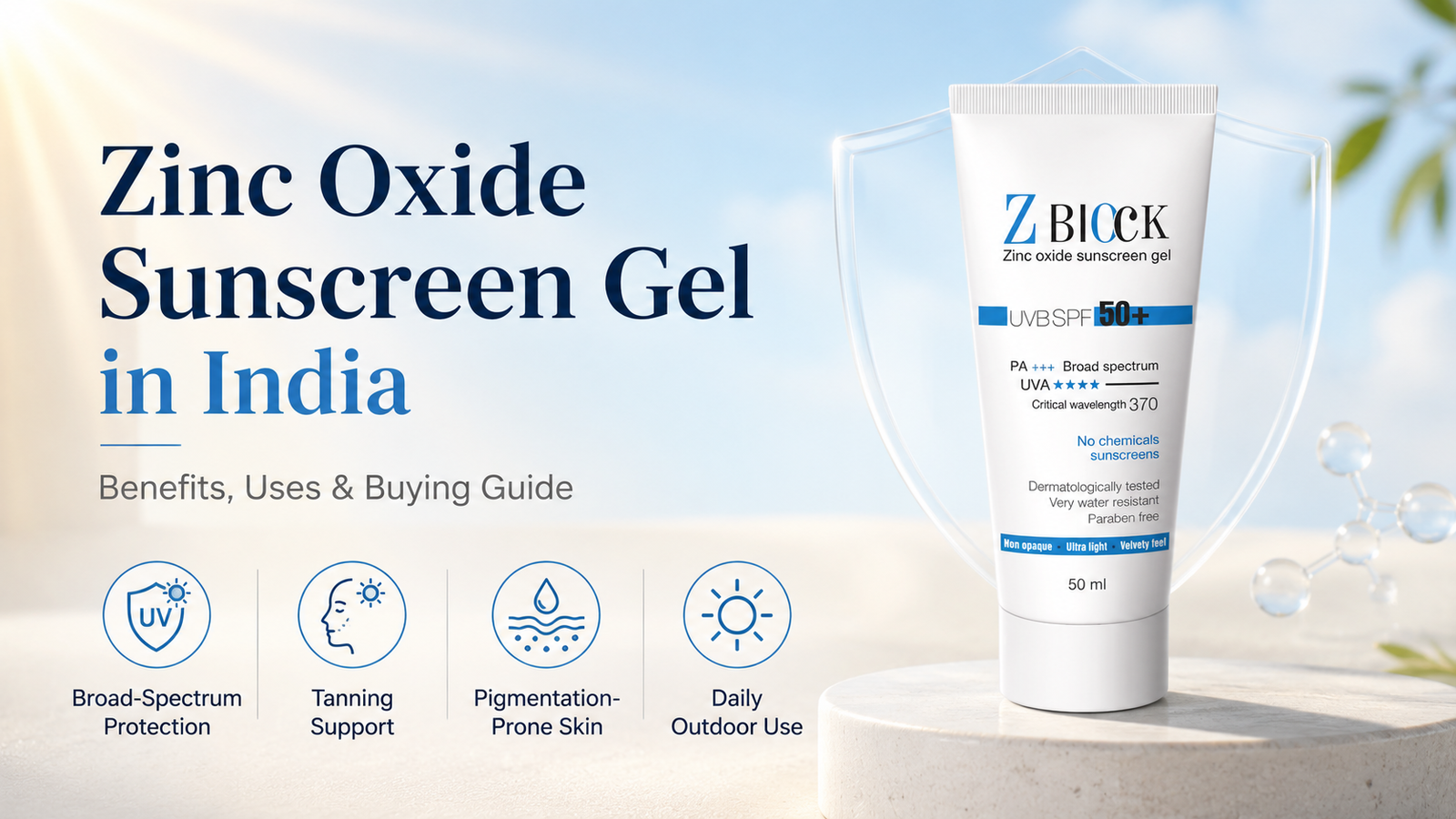

A zinc oxide sunscreen gel in India can be a good option for people who want broad-spectrum sun protection in a lightweight, daily-use texture. Zinc oxide is a mineral sunscreen filter that helps protect skin from both UVA and UVB rays when used in a properly formulated sunscreen.
In Indian conditions, sunscreen matters every day because the skin is regularly exposed to:
- Strong sunlight
- Heat
- Humidity
- Sweat
- Pollution
- Tanning
- Pigmentation triggers
- Outdoor travel
- Daily UV exposure
Many users prefer zinc oxide sunscreens because they are often associated with broad-spectrum protection, sensitive-skin suitability, and daily photoprotection support. But the formula still matters. A good sunscreen should be comfortable enough to use every day, because sunscreen works best only when applied properly and reapplied when needed.
The American Academy of Dermatology explains that sunscreens with zinc oxide or titanium dioxide are physical/mineral sunscreens, and dermatologists often recommend them for sensitive skin.
What Is Zinc Oxide Sunscreen?
Zinc oxide sunscreen is a sunscreen that uses zinc oxide as one of its active UV-filter ingredients. Zinc oxide is commonly used in mineral sunscreens.
A zinc oxide sunscreen may help protect against:
- UVA rays
- UVB rays
- Tanning
- Sunburn
- Pigmentation worsening
- Sun-related dullness
- Premature ageing signs linked with UV exposure
Broad-spectrum sunscreens help protect against both UVA and UVB radiation. The FDA explains that SPF mainly reflects UVB protection, while broad-spectrum sunscreens also help protect against UVA radiation.
Why Zinc Oxide Sunscreen Is Popular in India
Zinc oxide sunscreens are popular because Indian users often deal with tanning, pigmentation, acne marks, melasma-prone skin, heat, sweat, and daily outdoor exposure.
A zinc oxide sunscreen gel may be preferred when users want:
- Broad-spectrum sun protection
- A mineral sunscreen filter
- A lighter texture than heavy creams
- Daily outdoor protection
- Support for pigmentation-prone skin
- Sensitive-skin friendly sunscreen options
- Protection from tanning and sun-related dullness
- A sunscreen that fits Indian weather better
The key is choosing a sunscreen that gives protection and still feels comfortable enough for daily use.
Why Sunscreen Matters for Tanning and Pigmentation
Tanning and pigmentation often get worse with sun exposure. Even if you use brightening creams, serums, or pigmentation products, skipping sunscreen can reduce results.
Sunscreen is important because it helps protect skin from UV exposure that can contribute to:
- Tanning
- Dark spots
- Uneven tone
- Melasma worsening
- Post-acne marks getting darker
- Premature fine lines
- Sun-related dullness
For pigmentation-prone skin, sunscreen is not optional. It is the foundation of the routine.
The AAD recommends using a broad-spectrum sunscreen with SPF 30 or higher, and reapplying sunscreen every two hours when outdoors, especially after sweating or swimming.
Zinc Oxide Sunscreen Gel vs Cream Sunscreen
A gel sunscreen and a cream sunscreen can both work, but the texture is different.
| Point | Zinc Oxide Sunscreen Gel | Cream Sunscreen |
|---|---|---|
| Texture | Lightweight gel feel | Richer, creamier feel |
| Best for | Oily, sweaty, humid-weather routines | Dry or normal skin |
| Daily comfort | Usually easier in Indian heat | May feel heavier for some users |
| Finish | Can feel lighter | Can feel more moisturising |
| Use case | Outdoor, oily skin, daily wear | Dry skin or winter use |
| Main concern | Must still apply enough product | May feel sticky if too rich |
For India, many users prefer gel sunscreens because they feel lighter in heat and humidity.
Benefits of Zinc Oxide Sunscreen Gel
A well-formulated zinc oxide sunscreen gel may offer several benefits.
| Benefit | How It Helps |
|---|---|
| Broad-spectrum support | Helps protect against UVA and UVB rays |
| Tanning protection | Reduces UV exposure that contributes to tanning |
| Pigmentation support | Helps prevent dark spots from worsening |
| Daily outdoor protection | Useful for commuting and sun exposure |
| Sensitive-skin suitability | Mineral sunscreens are often preferred for sensitive skin |
| Lightweight texture | More comfortable in Indian heat |
| Oily skin comfort | Gel texture may feel less heavy |
| Anti-aging support | Helps protect against UV-related ageing signs |
The most important benefit is consistent use. A sunscreen that feels comfortable is more likely to be used daily.
What to Look for in a Zinc Oxide Sunscreen Gel in India
Before buying, check these points:
1. Broad-Spectrum Protection
Choose sunscreen that says broad spectrum, because this means it protects against both UVA and UVB rays.
2. SPF 30 or Higher
For daily sun protection, SPF 30 or higher is commonly recommended.
3. Comfortable Gel Texture
In Indian heat and humidity, texture matters. If the sunscreen feels greasy, users often skip it.
4. Suitability for Skin Type
Oily skin may prefer gel or water-based textures. Dry skin may need sunscreen with moisturising support.
5. Low Irritation Potential
Sensitive skin users may prefer mineral filters like zinc oxide or titanium dioxide.
6. Non-Comedogenic Preference
If you have acne-prone skin, look for non-comedogenic or acne-prone-skin-friendly claims where available.
7. No “Waterproof” Overclaim
No sunscreen is truly waterproof. If you sweat or wash your face, reapplication matters.
Who Should Consider Zinc Oxide Sunscreen Gel?
A zinc oxide sunscreen gel may be useful for:
- People exposed to Indian sun daily
- Outdoor workers
- College students
- Daily commuters
- People with tanning concerns
- Pigmentation-prone skin users
- Melasma-prone skin users
- People with post-acne marks
- Oily skin users who dislike heavy creams
- Sensitive skin users who prefer mineral sunscreens
- People looking for daily broad-spectrum protection
It can be especially useful when the main concern is daily sun protection without a sticky, heavy feel.
Who Should Be Careful?
Be careful while choosing any sunscreen if you have:
- Very sensitive skin
- Active rash
- Broken skin
- Severe acne irritation
- Allergy to sunscreen ingredients
- Burning or stinging after application
- Eye irritation from sunscreen
- Melasma or severe pigmentation needing medical care
If pigmentation is severe, spreading, sudden, or linked with hormonal changes, consult a dermatologist.
How to Use Zinc Oxide Sunscreen Gel Correctly
Sunscreen works only when used correctly.
Step-by-step use
- Cleanse your face gently.
- Apply moisturiser if your skin feels dry.
- Apply sunscreen as the last step of your morning skincare routine.
- Use enough product to cover face, neck, and exposed areas.
- Apply 15 minutes before going outdoors if your product label suggests it.
- Reapply every two hours when outdoors.
- Reapply after sweating, swimming, or wiping the face.
AAD guidance says sunscreen should be reapplied every two hours when outdoors and immediately after swimming or sweating.
How Much Sunscreen Should You Apply?
Most people underapply sunscreen. If you apply too little, protection reduces.
For the face and neck, a practical rule is to apply enough to create an even layer. Many skincare users follow the two-finger rule for the face and neck, but product texture and face size can vary.
The important thing is:
- Do not apply a tiny dot
- Cover face and neck evenly
- Do not forget ears, hairline, and back of neck
- Reapply when outdoors
Zinc Oxide Sunscreen for Oily Skin
A zinc oxide sunscreen gel may suit oily skin if the formula is lightweight and non-greasy.
Oily skin users should look for:
- Gel texture
- Matte or non-greasy finish
- Non-comedogenic positioning
- Sweat-comfortable feel
- Lightweight daily wear
If sunscreen feels too heavy, users may avoid it. That is why gel texture can be helpful.
Zinc Oxide Sunscreen for Pigmentation-Prone Skin
If you have pigmentation, dark spots, melasma, or post-acne marks, sunscreen is one of the most important products in your routine.
A zinc oxide sunscreen gel may help support pigmentation care by reducing UV exposure that can worsen:
- Dark spots
- Uneven tone
- Tanning
- Melasma
- Acne marks
- Sun-related dullness
But sunscreen does not remove pigmentation alone. It helps prevent worsening and supports the results of other skincare products.
Zinc Oxide Sunscreen for Sensitive Skin
Mineral sunscreens are often preferred by sensitive skin users because zinc oxide and titanium dioxide are physical sunscreen filters. The AAD notes that dermatologists recommend physical sunscreens for people with sensitive skin.
Still, every formula is different. Sensitive skin users should patch test and avoid products that sting, burn, or cause redness.
Common Mistakes to Avoid
1. Applying Too Little Sunscreen
A small amount may not give proper protection.
2. Not Reapplying
One morning application may not last through sweat, heat, wiping, and outdoor exposure.
3. Skipping Sunscreen Indoors Near Windows
UVA rays can pass through glass and contribute to ageing and pigmentation concerns.
4. Using Sunscreen Only in Summer
UV exposure happens throughout the year.
5. Expecting Sunscreen to Remove Pigmentation
Sunscreen helps prevent worsening; it does not erase pigmentation overnight.
6. Forgetting Neck and Ears
These areas are often exposed and commonly missed.
Zinc Oxide Sunscreen Gel in India: Final Buying Guide
Choose a zinc oxide sunscreen gel if you want:
- Mineral sunscreen support
- Broad-spectrum protection
- Daily sun protection
- Lightweight texture
- Pigmentation and tanning support
- Sensitive-skin-friendly sunscreen direction
- Better comfort in Indian heat
- A sunscreen that can fit daily routine
Avoid choosing only by SPF number. Look at texture, broad-spectrum claim, skin compatibility, and whether you will actually use it every day.
Final Thoughts
A zinc oxide sunscreen gel in India can be a practical option for daily sun protection, especially for users dealing with tanning, pigmentation, sensitive skin, oily skin, or outdoor exposure.
Zinc oxide is a mineral sunscreen filter commonly used for broad-spectrum protection. A gel texture can make sunscreen more comfortable in Indian heat and humidity, especially for oily or sweaty skin.
For best results, use enough sunscreen, apply it daily, and reapply when outdoors, sweating, or wiping the skin. Sunscreen is not just for beach days — it is a daily skincare essential.
FAQs-
Q1. Is zinc oxide sunscreen good for Indian skin?
Ans: Yes, zinc oxide sunscreen can be useful for Indian skin because it supports broad-spectrum protection and may help with tanning and pigmentation-prone skin routines.
Q2. Is zinc oxide sunscreen good for pigmentation?
Ans: Zinc oxide sunscreen may help prevent pigmentation from worsening by reducing UV exposure. It does not remove pigmentation alone.
Q3. Is zinc oxide sunscreen gel good for oily skin?
Ans: A gel texture may be suitable for oily skin because it usually feels lighter than cream sunscreen. Look for non-greasy and non-comedogenic positioning.
Q4. Is zinc oxide sunscreen suitable for sensitive skin?
Ans: Zinc oxide is a mineral sunscreen filter, and mineral sunscreens are often recommended for sensitive skin users. Still, patch testing is important.
Q5. What SPF should I choose?
Ans: Choose a broad-spectrum sunscreen with SPF 30 or higher for daily sun protection.
Q6. How often should I reapply sunscreen?
Ans: Reapply every two hours when outdoors, and immediately after sweating, swimming, or wiping your face.
Q7. Can zinc oxide sunscreen prevent tanning?
Ans: It can help reduce tanning caused by UV exposure when applied properly and reapplied as needed. It cannot fully prevent tanning if underapplied or not reapplied.
Q8. Can I use zinc oxide sunscreen daily?
Ans: Yes, sunscreen should be used daily as part of a morning skincare routine, especially in sunny climates and during outdoor exposure.
Leave a Reply